Store-bought back-tab curtains often hang flat or lumpy: a deep fold here, a wide gap there. Custom pinch-pleated drapes fix that, but they cost a lot. You can get surprisingly close with what you have.
Why back-tab curtains don't pleat on their own
Pleats come from consistent spacing. A pleated drape has fabric gathered at fixed points, so every fold is the same size. Back tabs are evenly spaced on the fabric, but on the rod they slide freely and bunch together unevenly. Some tabs end up touching, others drift apart, and the folds follow.
So the goal is simple: keep the tabs evenly spaced on the rod when the curtain is closed.
Method 1: Train the folds with ties (free, takes a few days)
- Close the curtain and arrange the tabs evenly by hand.
- Fold the fabric into even accordion folds all the way down, front fold, back fold, matching each tab.
- Loosely tie the folded panel at two or three heights with ribbon or fabric strips.
- Leave it for 2 to 5 days, then untie. A quick steam before tying helps the folds set faster.
This works well on cotton and linen. The catch: the folds relax again every time you open and close the curtain, so you'll repeat it.
Method 2: Use enough fabric
Flat curtains are often just too narrow. For a full look, the combined width of your panels should be about 2 times the window width (1.5 times at minimum). If your panels only cover the window when pulled tight, no technique will make them look pleated. Add a panel.
Method 3: Steam, then hang weights
Steam the panels while they hang, shaping the folds with your hands as you go. If the hem flips or kicks out, small drapery weights sewn or clipped into the bottom corners help the folds hang straight.
Method 4: Lock the spacing with SilkSlide clips
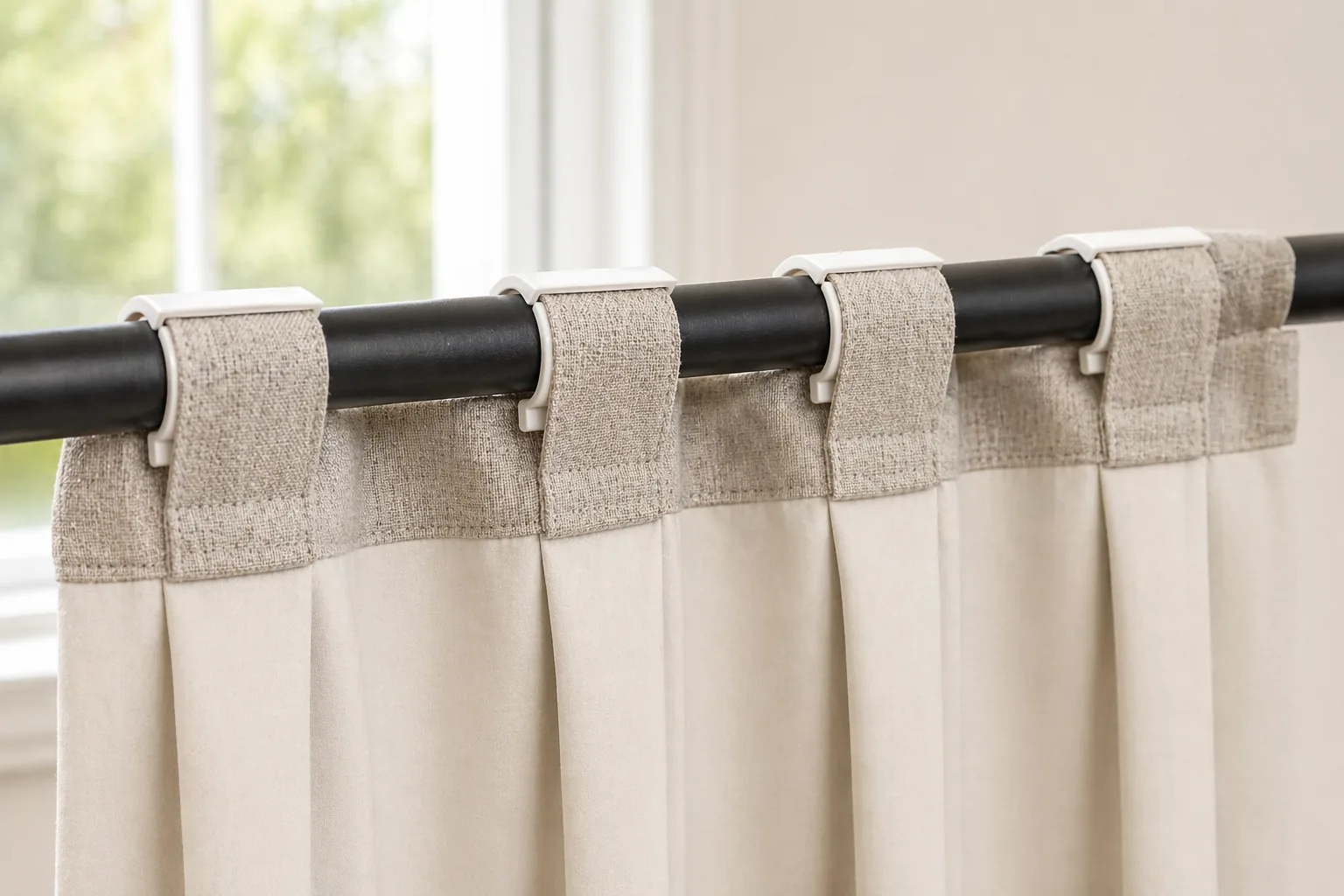
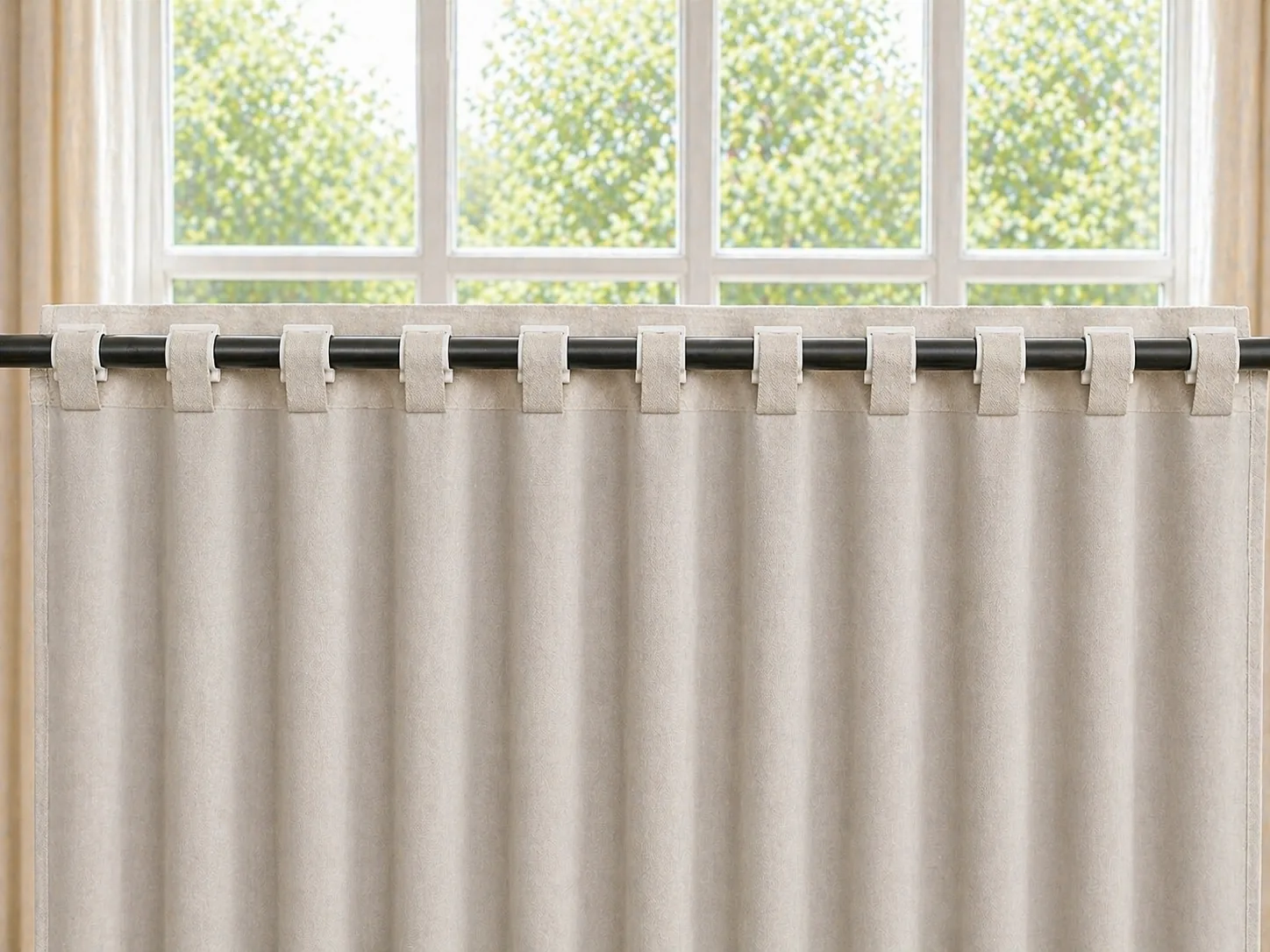
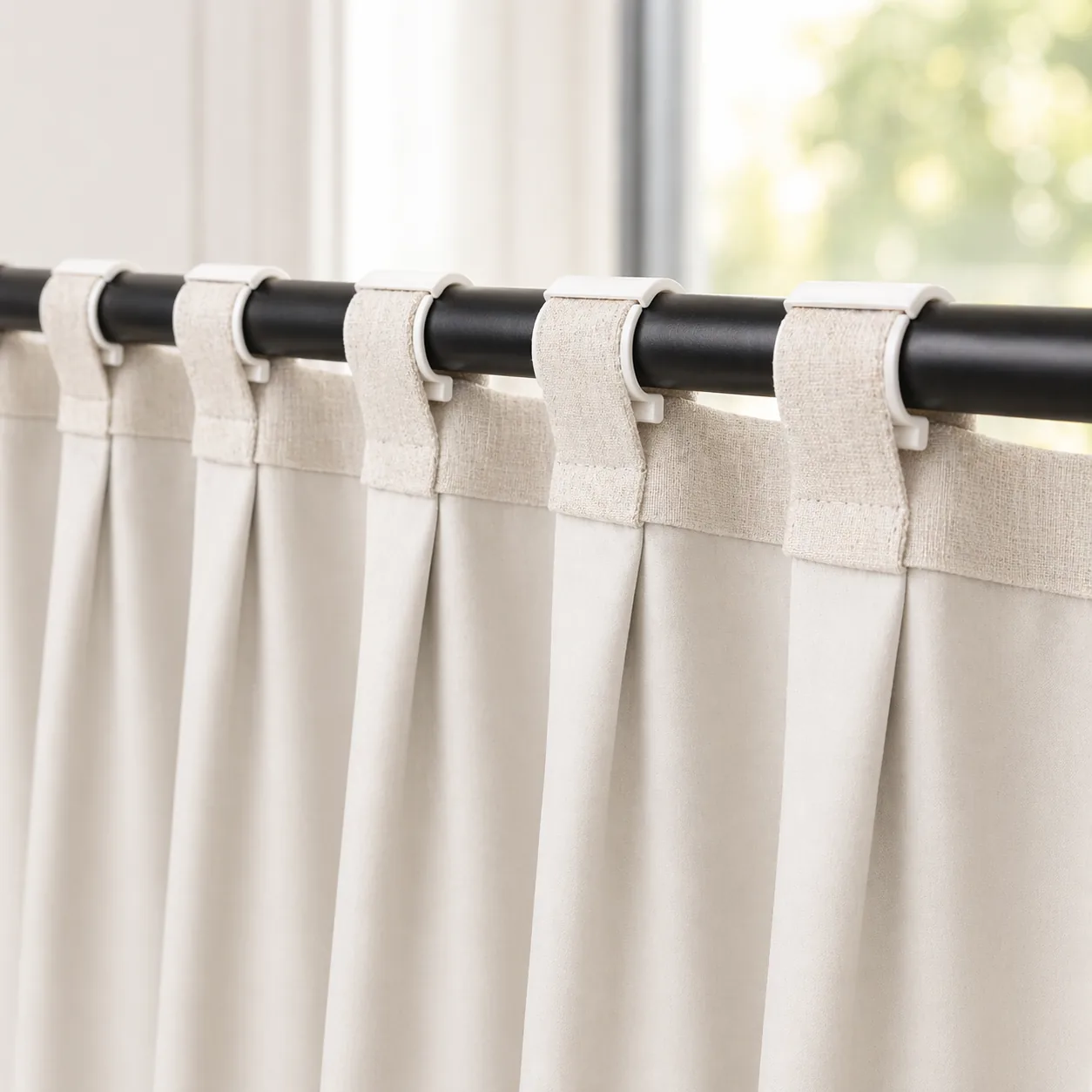
This is the one that keeps working every time you close the curtain. Each SilkSlide clip sits on the rod with a back tab looped around it. The clip body is slightly wider than the tab, so when you close the curtain each tab bumps into the next clip and stops at the same distance. The fabric between tabs has nowhere to go but forward, so it folds into the same even wave every time.
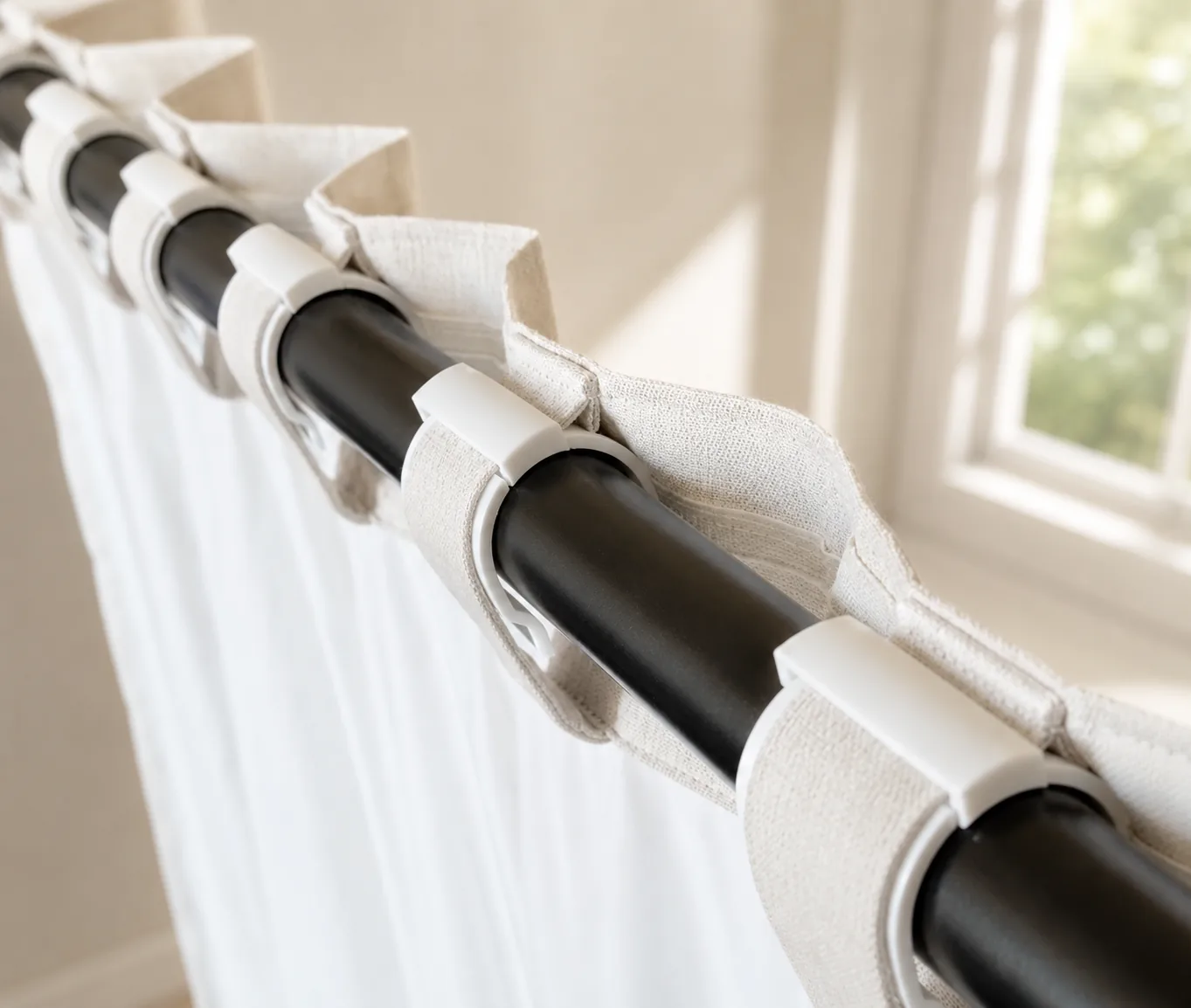
No fluffing or re-tying after every use. And because the tabs ride on smooth clips instead of the rod, the curtain also stops dragging, which is the other big complaint about back tabs (here's why they stick).
Even pleats, every time you close
SilkSlide clips space your tabs evenly so the fabric folds the same way, and the curtain glides open with one finger.
Shop SilkSlide, from $12.99Tips for the most custom look
- Use one clip per tab. Skipping tabs gives you uneven folds. Most panels have 7 to 10 tabs, which is why the Starter Pack has 8 clips for one panel.
- Mount high and wide. Hang the rod 4 to 6 inches above the window frame and extend it past the frame on both sides. The window looks bigger and the curtains stack off the glass when open.
- Get the length right. Curtains that just kiss the floor look tailored. Too short looks like a mistake.
- Pick a rod that fits. SilkSlide fits 3/4" and 1" rods. Check yours with the rod size guide.