Curtains that drag on the rod are one of those small, daily annoyances that add up. The good news is that almost every case is fixable in under ten minutes. The catch: the fix depends on how your curtain attaches to the rod.
Step 1: Identify your curtain header
Look at the top of the panel from behind.
- Grommet: large metal or plastic rings punched through the fabric. The rod goes through the rings.
- Rod pocket: a sewn sleeve across the top. The rod goes through the sleeve.
- Back tab: fabric loops sewn across the back. From the front it looks like a flat, clean header. The rod goes through the loops.
- Dual header: both a rod pocket and back tabs. You can hang it either way.
- Pinch pleat or ring top: already uses hooks or rings, so it usually slides fine unless the rod or rings are the problem.
Fixes that work for every curtain type
1. Clean the rod
Dust and grime add a surprising amount of drag. Wipe the rod with a damp microfiber cloth, then dry it fully. It's free and it should always be your first step.
2. Lubricate the rod
Rub a dry bar of soap or a plain candle along the top of the rod, or use a dry-film silicone spray with the curtains taken down. Wipe off the excess. It's a quick win, but it wears off and won't do much for heavy fabrics.
3. Check that the rod isn't sagging
A rod that bows in the middle makes curtains slide uphill toward the brackets. Long rods (roughly 6 feet and up) and heavy curtains usually need a center support bracket. See our heavy curtain guide for bracket spacing.
Fixes for grommet curtains
4. Make sure the rod is thinner than the grommets
Grommets slide well when there's room to spare. If the rod nearly fills the grommet opening, the rings bind. A slightly thinner rod or a smoother finish helps a lot.
Fixes for rod-pocket curtains
5. Add clip rings or switch the header
Rod pockets are made to stay put, not slide. They're best for curtains you rarely open. If you open them daily, the honest answer is to hang the curtain from clip rings, or switch to a dual-header curtain and use the back tabs instead.
Fixes for back-tab curtains
Back tabs have the worst friction because fabric sits directly on the rod at every tab. We cover the cause in depth in why back-tab curtains won't slide, but here are the two fixes that make the biggest difference:
6. Clip rings (changes the look)
Clip rings slide well, but you lose the clean back-tab header. The curtain hangs lower and the rings show.
7. SilkSlide clips (keeps the look)
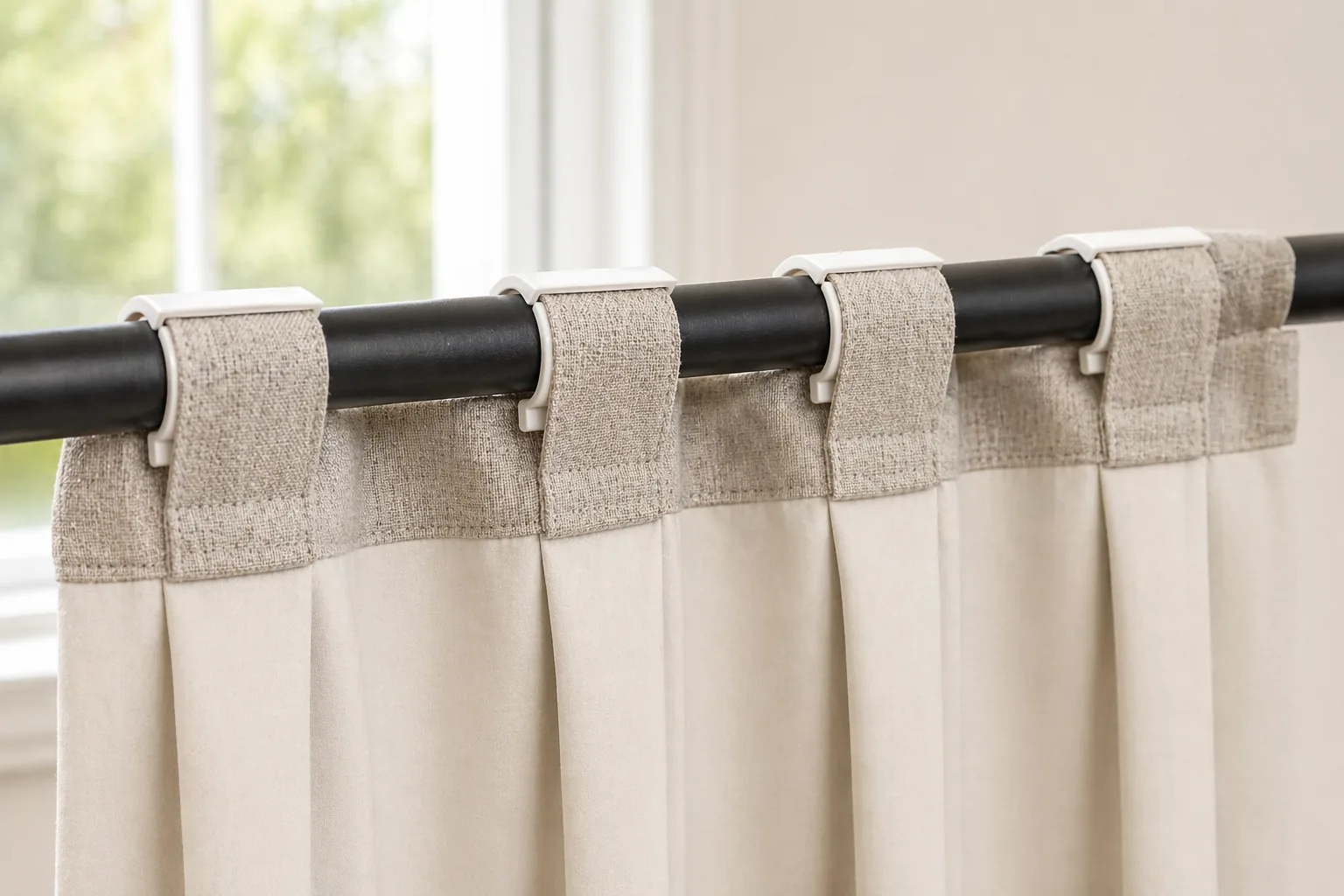
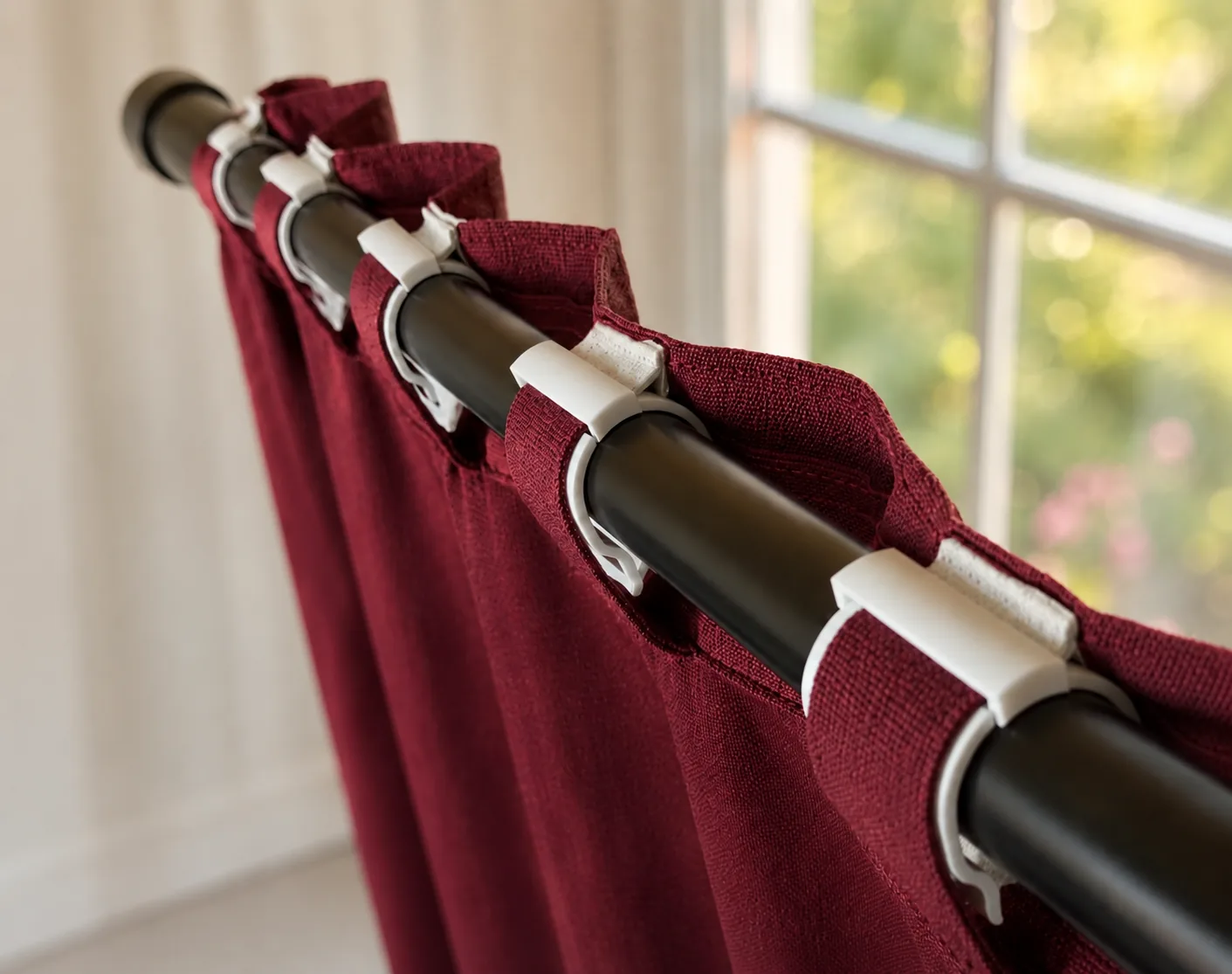
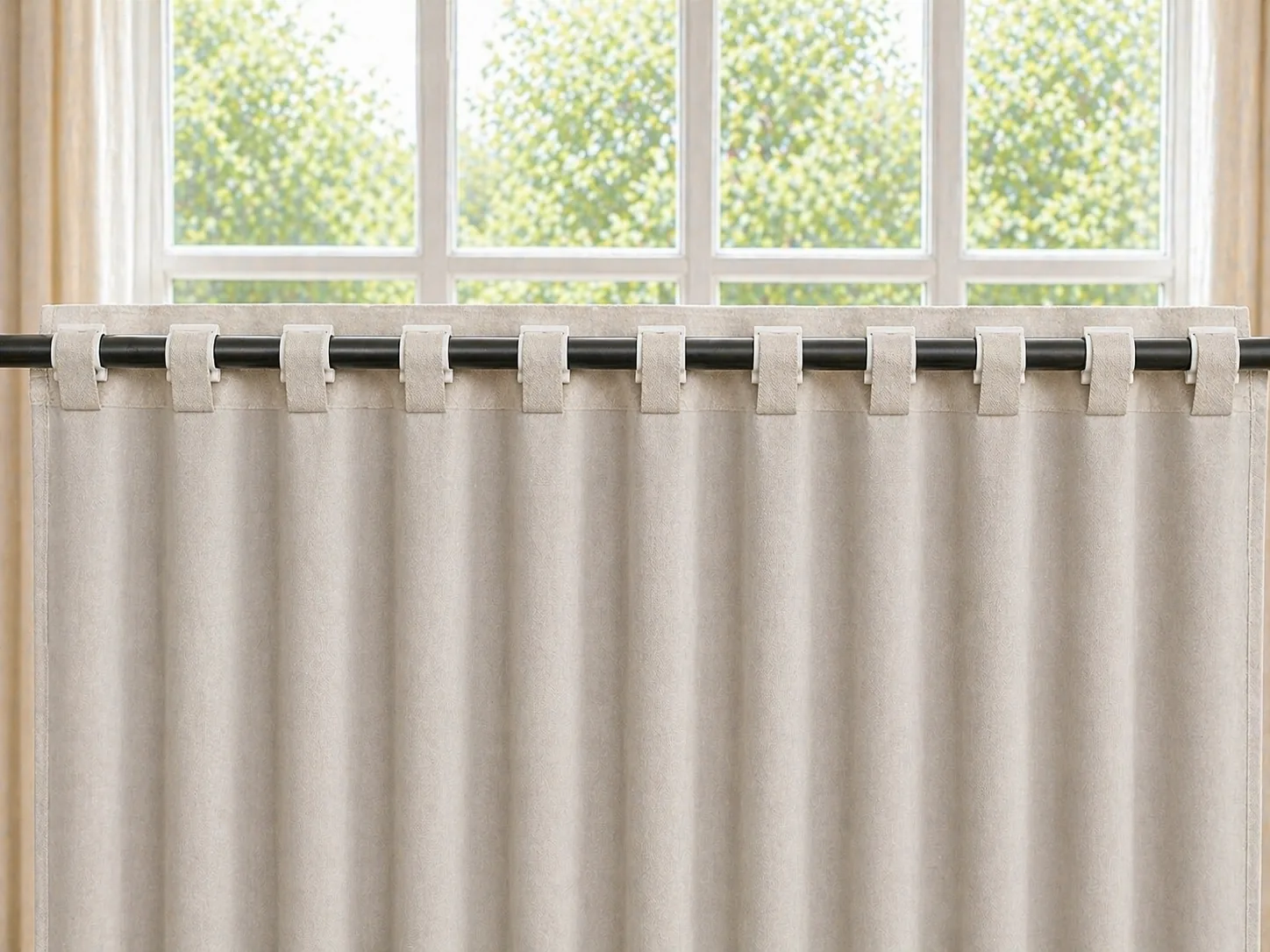
SilkSlide clips snap onto the rod, and each tab loops around a clip instead of the rod. The fabric never touches the rod, so there's nothing to grip. From the front, the curtain still looks like a back-tab curtain. It just opens with one finger now.

Made for back-tab curtains
Snap-on clips that take the fabric off the rod. No tools, no drilling, no new curtains. Fits 3/4" and 1" rods.
Shop SilkSlide, from $12.99Quick reference
| Curtain type | Most likely cause | Best fix |
|---|---|---|
| Grommet | Rod too thick or rough finish | Clean, lubricate, or use a thinner, smoother rod |
| Rod pocket | Not designed to slide | Clip rings or switch to back tabs |
| Back tab | Fabric on the rod at every tab | SilkSlide clips |
| Any type, heavy fabric | Weight plus rod sag | Center bracket plus the fix above |