If you're buying new curtains or tired of fighting the ones you have, the hanging style matters as much as the fabric. Here's how the common options compare.
The options at a glance
| Style | Look | Glide | Heavy fabric | Hardware visible |
|---|---|---|---|---|
| Rod pocket | Gathered, casual | Poor | Poor | Rod hidden |
| Back tab | Clean, tailored | Poor | Poor | Rod mostly hidden |
| Grommet | Deep modern folds | Good | Good | Grommets show |
| Clip rings | Café / traditional | Good | OK (clips can slip) | Rings and clips show |
| Sewn rings or pinch pleat | Formal, custom | Very good | Very good | Rings show |
| Back tab + SilkSlide | Clean, evenly pleated | Very good | Good | Rod mostly hidden |
Rod pocket
A sewn sleeve the rod slides through. It's the cheapest option and it hides the rod, but fabric wraps all the way around the rod, so it barely slides. Best for curtains that stay put, like sheers or decorative side panels.
Back tab
Fabric loops on the back of the header. From the front you see a flat, clean top edge with soft folds below, which is why they're so popular. The problem is that fabric sits on the rod at every tab, so they drag and bunch, especially heavy ones. (Full explanation: why back-tab curtains won't slide.)
Grommet
Metal rings punched into the fabric. They slide well and make deep, modern folds. On the downside, the grommets are visible, the folds are big and casual, and light leaks through the top between grommets, which matters for blackout curtains.
Clip rings
Rings with small clamps that grip the top of any curtain. They're the most common retrofit for curtains that won't slide. They glide well, but the curtain drops lower (so it may no longer reach the floor right), the hardware shows, the fabric droops between clips, and heavy panels can slip out of the clamps.
Sewn rings and pinch pleats
The custom-drapery approach: pleats sewn at fixed spacing with hooks into rings or a track. It looks great and glides well, but it's the most expensive by far, often hundreds of dollars per window.
The hybrid: back tabs on SilkSlide clips
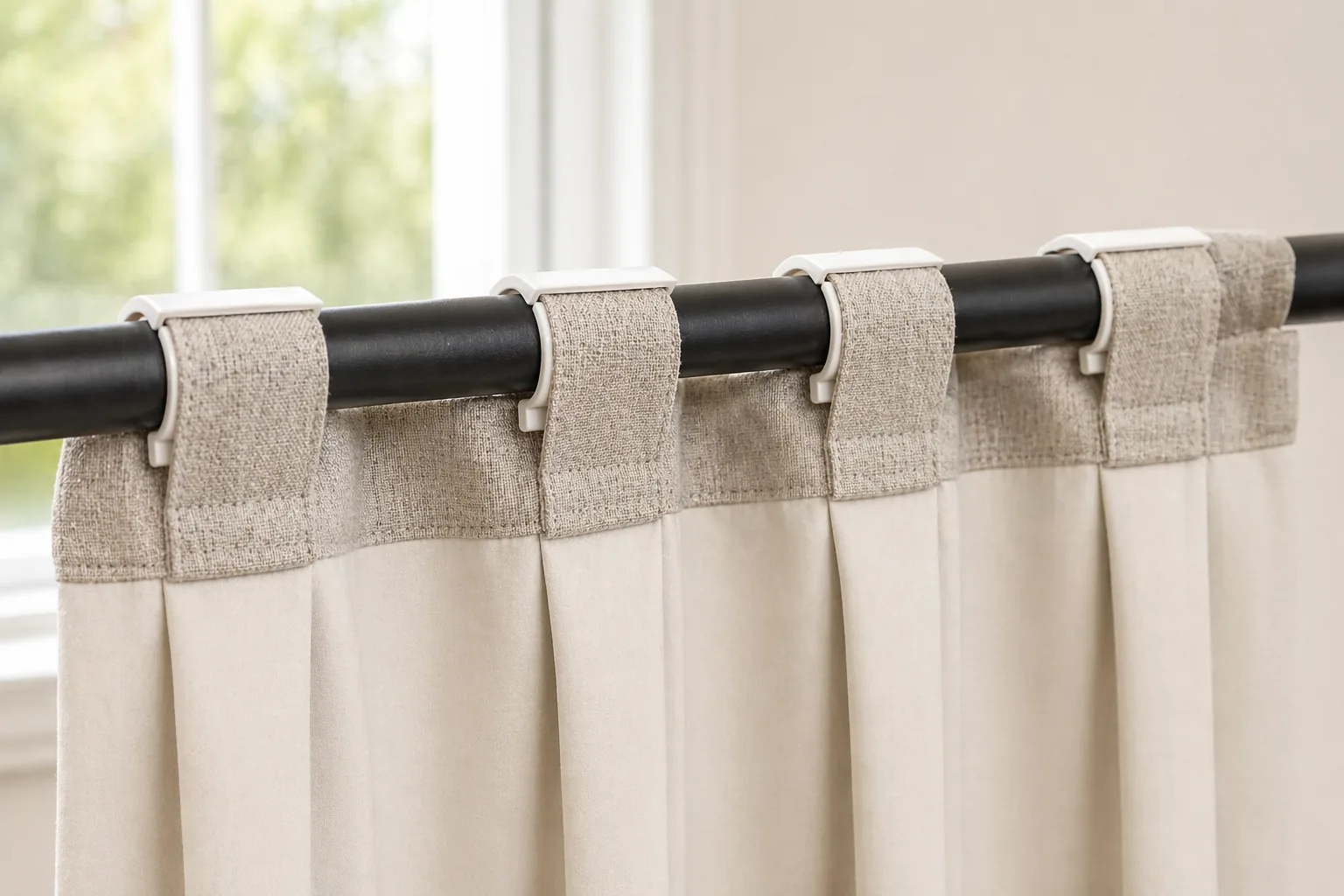
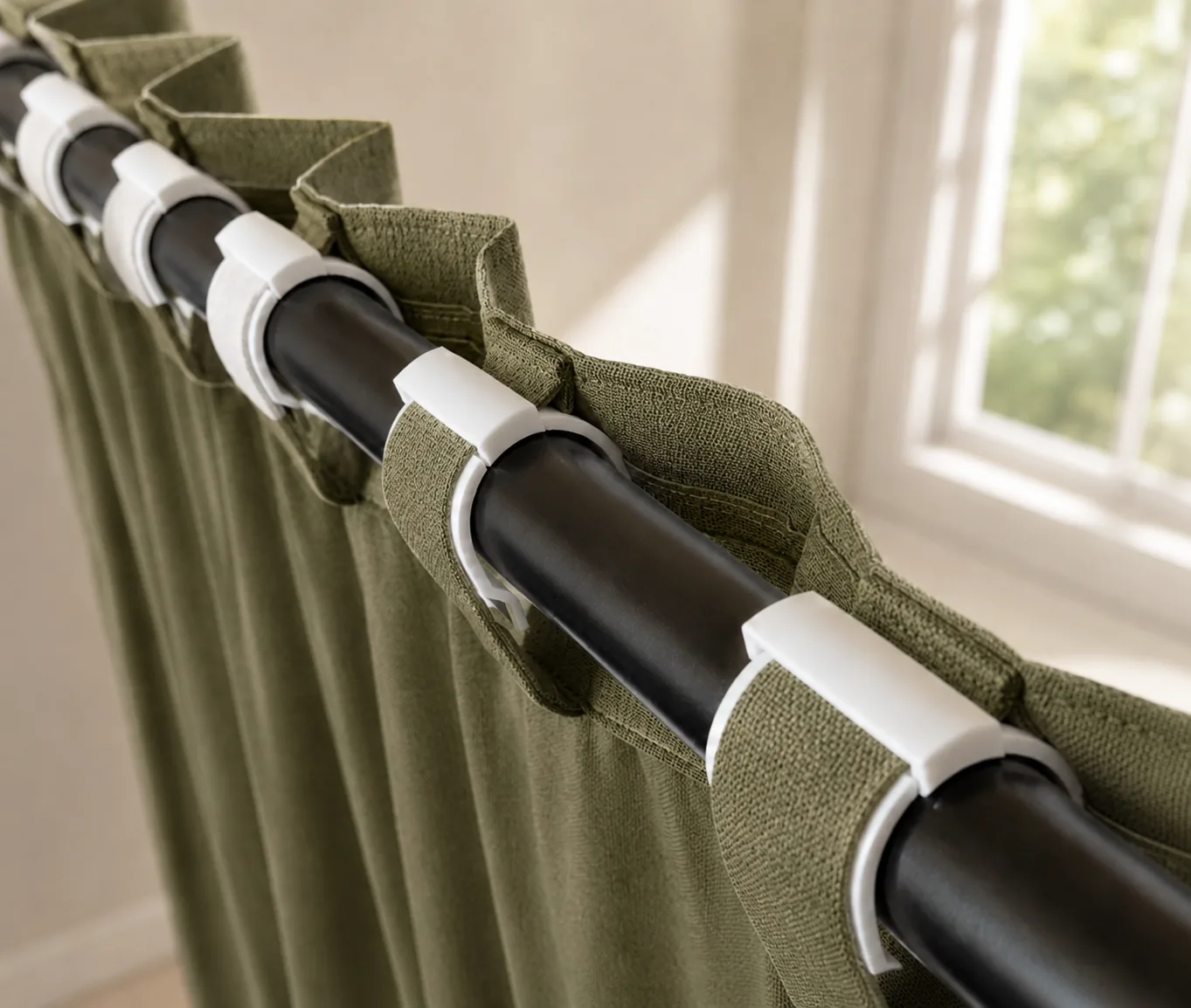
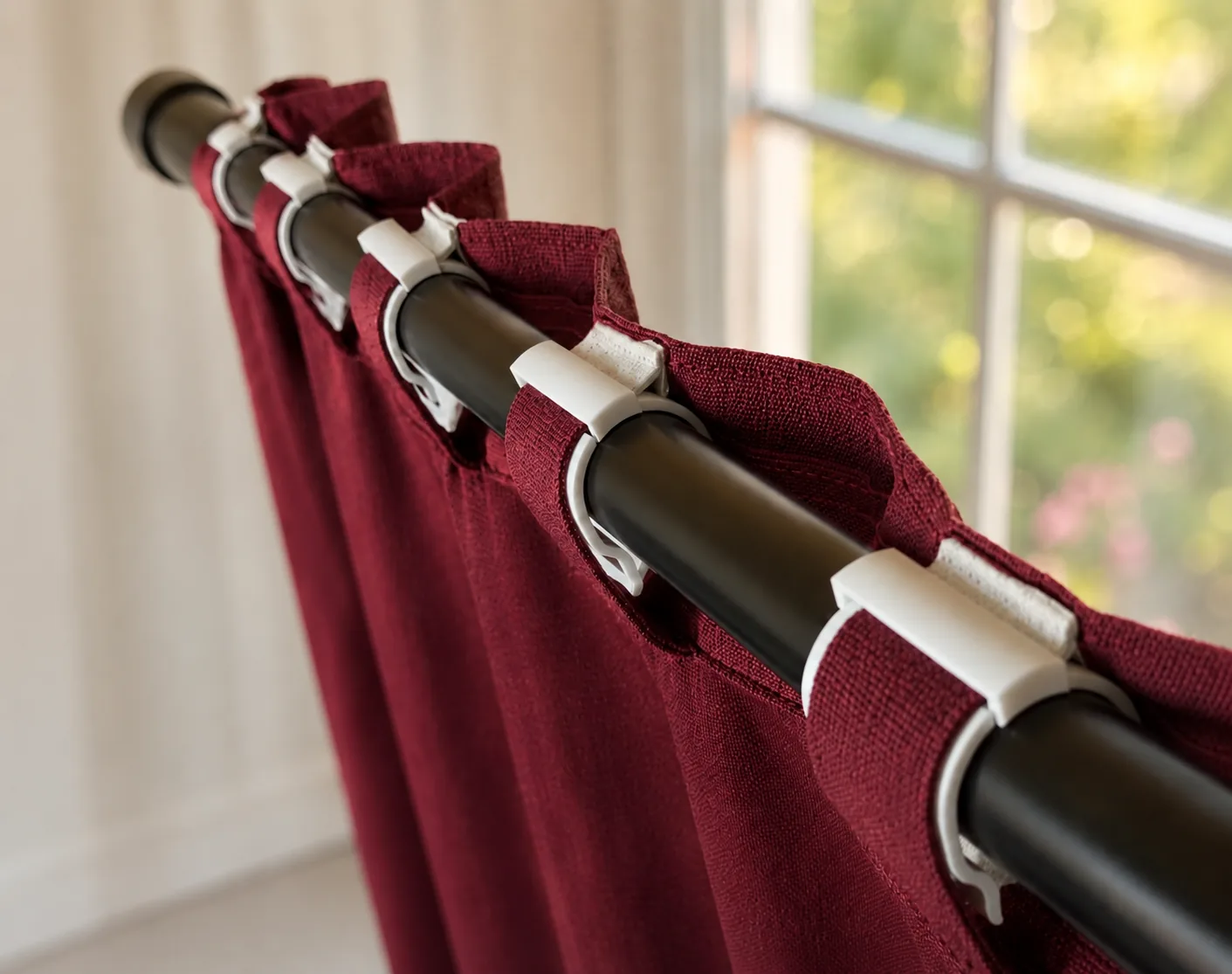
SilkSlide keeps the back-tab look and fixes the two things back tabs are bad at. Each clip snaps onto the rod and the tab loops around it, so the fabric rides on smooth plastic instead of the rod. And because each clip is slightly wider than the tab, the tabs space out evenly when closed, giving you a uniform wave close to a pleated look.
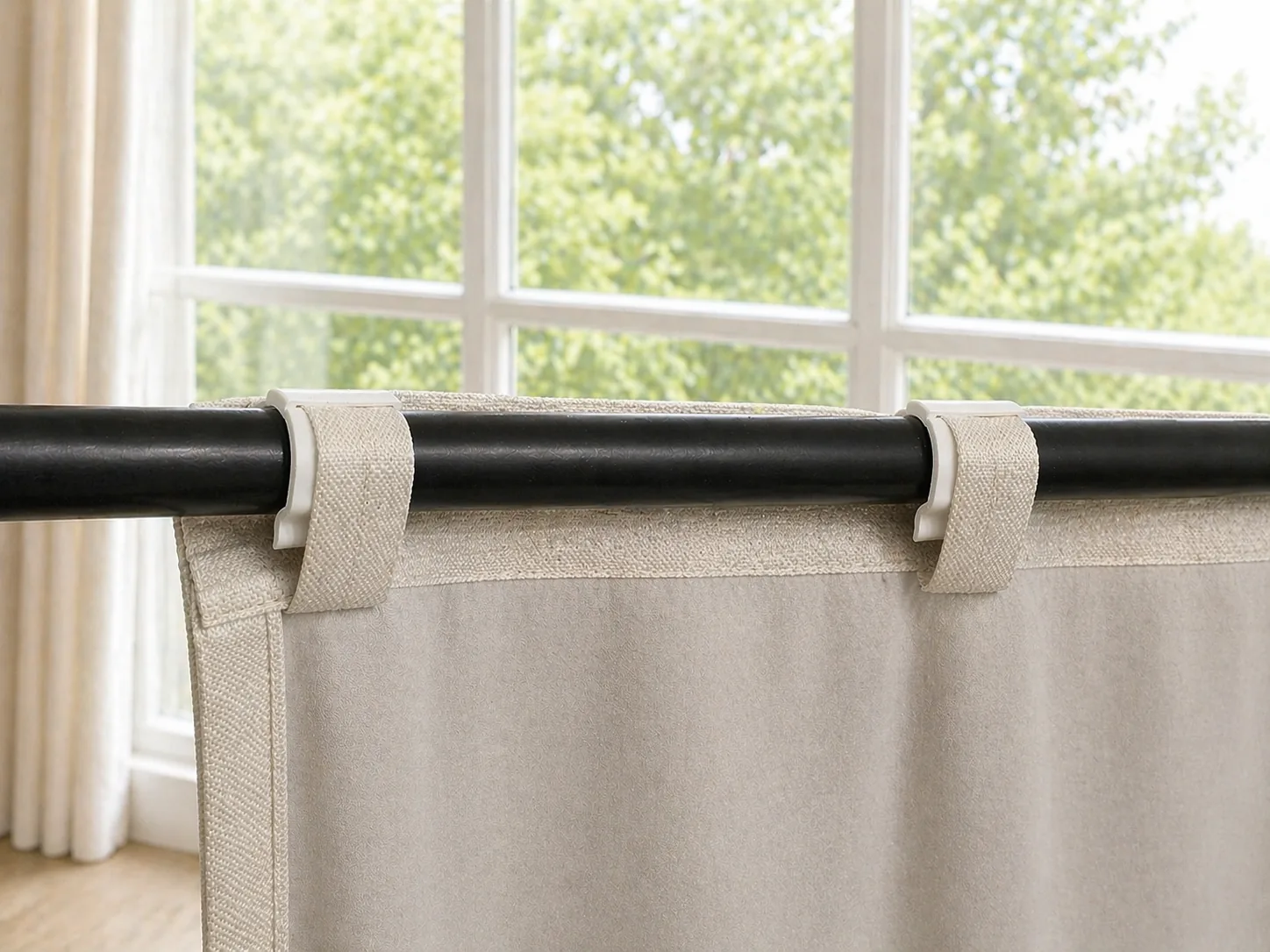
It's not for every curtain: SilkSlide only works with back-tab and dual-header curtains on 3/4" or 1" rods. But if that's what you have, it's the cheapest way to get the glide of rings without losing the look you bought the curtains for.
Keep the back-tab look. Lose the drag.
SilkSlide gives back-tab curtains the glide of rings without changing how they hang. 60-second install, no tools.
Shop SilkSlide, from $12.99So which should you choose?
- Buying new and want easy everyday use: grommet, or back tab plus SilkSlide if you prefer the cleaner header.
- Already own back-tab curtains: SilkSlide. No new curtains, no change in length, no visible rings.
- Formal room, big budget: custom pinch pleat on rings or a track.
- Curtains you never open: rod pocket is fine.
Not sure what rod you have? Check it with our rod size guide before you buy hardware of any kind.